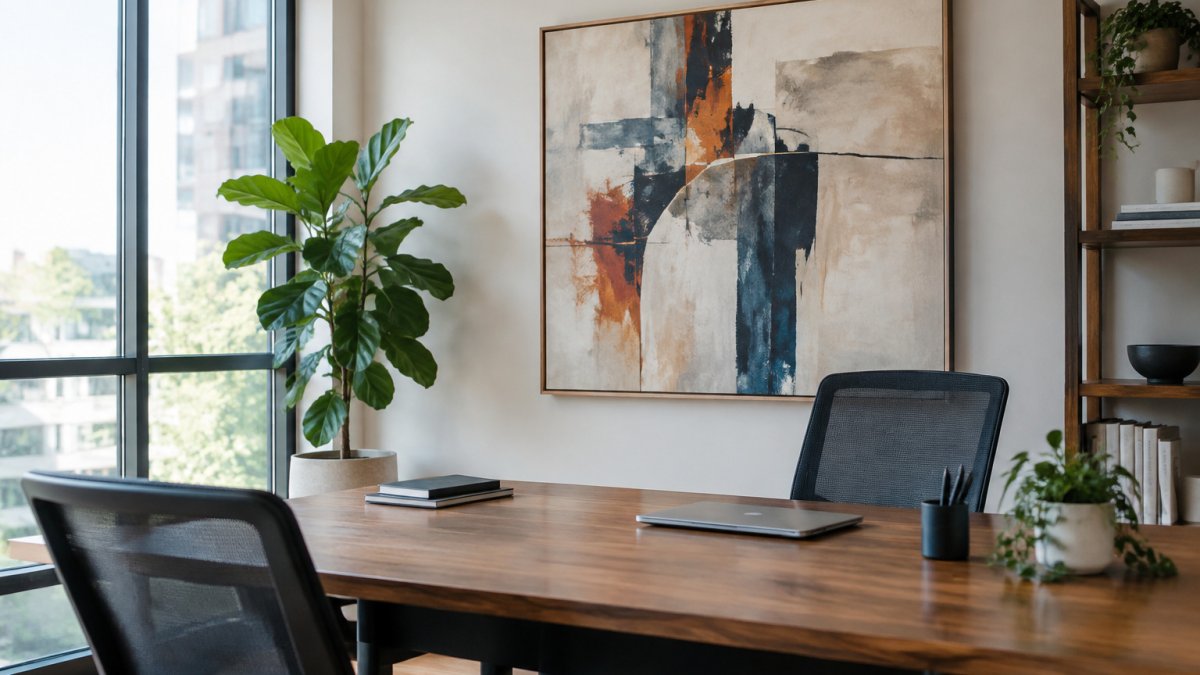
 Ultimate guide
Tips for Buying Art for Offices That Fit Your Space
Last Updated: November 22, 2026
Quick Summary
Buying art for offices works best as a planned project: define each room's purpose and mood first, then match the size, placement and type of art to the walls and furniture. Office art should be sized to roughly two-thirds to three-quarters of the furniture width beneath it and hung with its centre near eye level.
- Decide each room's primary use, daily viewers and intended feeling before shopping.
- Let artwork fill about two-thirds to three-quarters of the furniture width it hangs above.
- Hang the centre of each piece at roughly eye level for an average adult.
- Choose prints for multiple walls on tight budgets, and originals for statement pieces.
- Set a total budget and allocate it across rooms before you start buying.
Table of Contents
Choosing art for an office is one of the few decorating decisions that every employee, client and visitor will notice, which is why buying art for offices deserves careful planning. A common pattern in offices is a large canvas bought in a rush and hung wherever there is an empty wall, leaving the space feeling unfinished. Good tips for buying art for offices start with treating the purchase as a deliberate project rather than a last-minute decoration. Art sets the tone of a reception area, supports the mood of a meeting room and quietly signals what a company values.
Artwork is often described as the element that carries personality in an otherwise functional space. Office furniture is usually chosen for durability and cost, so the walls are where a company can express its identity. A deliberate process helps you avoid the three most common mistakes: buying by impulse, choosing pieces that clash with the room, and hanging art at the wrong height or scale. Each of these is easy to prevent with a little planning.
This guide walks through that process from start to finish. We cover how to define a room's purpose, how to match art to walls and furniture, how to compare prints with originals and commissioned work, and how to budget for a full collection. We also address accessibility, durability and how to judge whether the art is doing its job after it goes up.
Step 1: Define the Room's Purpose and Mood
Before you look at a single image, decide what the room is for. A reception area needs art that makes a strong first impression within seconds, while a private office benefits from calmer, more personal work that supports concentration. Write down the room's primary use, the number of people who will see the art daily, and the feeling you want visitors and staff to leave with. Those three answers will narrow your choices faster than any catalogue.
Office Wall Art Ideas by Room Type
Different rooms call for different approaches. Reception and client-facing spaces usually work best with bold, confident pieces that read clearly from across the room. Meeting rooms benefit from artwork with a restful palette that does not compete with presentations or video-call backgrounds. Open-plan areas can carry more energetic work, provided it is hung consistently so the space does not feel chaotic. Break rooms and corridors are good places for lighter, more playful pieces that break up long stretches of wall.
Comparing Prints, Originals and Commissioned Pieces
Three main routes exist for office art, and each suits a different budget and purpose. Prints are generally the most accessible option and are an easy way to fill several walls at once. Original artworks are one-of-a-kind pieces that carry more presence, though they cost more and are harder to replace. Commissioned pieces produce something unique to your space, but they generally require more time and involvement.
| Option | Best For | Typical Lead Time | Replaceability |
|---|---|---|---|
| Prints | Filling multiple walls, tight budgets | Days to a few weeks | Easy to reorder |
| Originals | Statement pieces, reception areas | Available now | Unique, hard to replace |
| Commissioned | Brand-specific spaces | Often several weeks or more | Unique to your brief |
Office Art Size Guide: Matching Art to Wall and Furniture
Scale is where most office purchases go wrong. A common guideline is to let artwork occupy roughly two-thirds to three-quarters of the wall or furniture width it sits above. A piece hung over a sofa that is far narrower than the sofa looks lost, while one that spans the entire wall can overwhelm a small room. Measure the wall first, then the furniture beneath it, and shortlist sizes that fall within that range.
Consider depth and visual weight as well. A large dark frame adds mass that a thin metal frame does not, so the same dimensions can feel very different in practice. When in doubt, a slightly smaller piece in a larger room is safer than an oversized one in a small space.
Office Art Placement: Height, Sightlines and Arrangement
Hang art so that its centre sits at roughly eye level for an average adult. This keeps the work comfortable to view while standing and seated. In reception areas, where visitors are standing, you may lower the piece slightly so it reads well from the entrance.
Think about sightlines from the places people actually stand and sit: the door, the reception desk, the end of a conference table. A piece that is visible from the entrance does more work than one tucked behind a door. For groups of works, a gallery wall arranged around a shared centre line looks more intentional than pieces scattered at random heights.
Budgeting, Procurement and Building a Corporate Art Collection
Pricing depends on size, medium, edition, framing and the number of pieces you buy, so the most useful budgeting step is to set a total figure and allocate it across rooms before you shop. Reach out to Jackson Smart Art directly for current prices and a quote, since costs vary with quantity, delivery timing and installation needs.
For procurement, document who approves purchases, how pieces are catalogued and where licensing terms are recorded for reproductions. Building a corporate art collection over time, rather than in one order, lets you refine your taste and spread the cost across budget cycles. Keep a simple inventory of each piece, its location and its purchase date.
Accessibility, Durability and Measuring Impact After Installation
Accessible art selection means considering how the work will be experienced by everyone who uses the space. Choose pieces with strong contrast and clear subjects that read well for people with low vision, and avoid hanging key works where glare from windows makes them hard to see. Ensure that any text or label beside the art is legible at a comfortable distance.
Durability matters in busy offices. Consider glazing that resists scratches and UV fading if the piece sits near a window, and use secure hanging hardware in high-traffic corridors.
Once the art is installed, measure its impact. Simple feedback methods work well: a short staff survey about how the spaces feel, observations of how long visitors pause at reception pieces, or notes from client meetings about the first impression. These signals help you decide whether to rotate works, add to the collection or adjust placement.
Booking Your Office Art Consultation With Jackson Smart Art
If you are ready to move from planning to purchase, the next step is a conversation about your specific rooms. Jackson Smart Art offers a curated collection of fine art prints, and our augmented reality feature lets you preview how a piece will look on your own wall before you buy. Visit the Jackson Smart Art website to explore current options and request a quote, and
Frequently Asked Questions
What is the 2/3 rule for wall art?
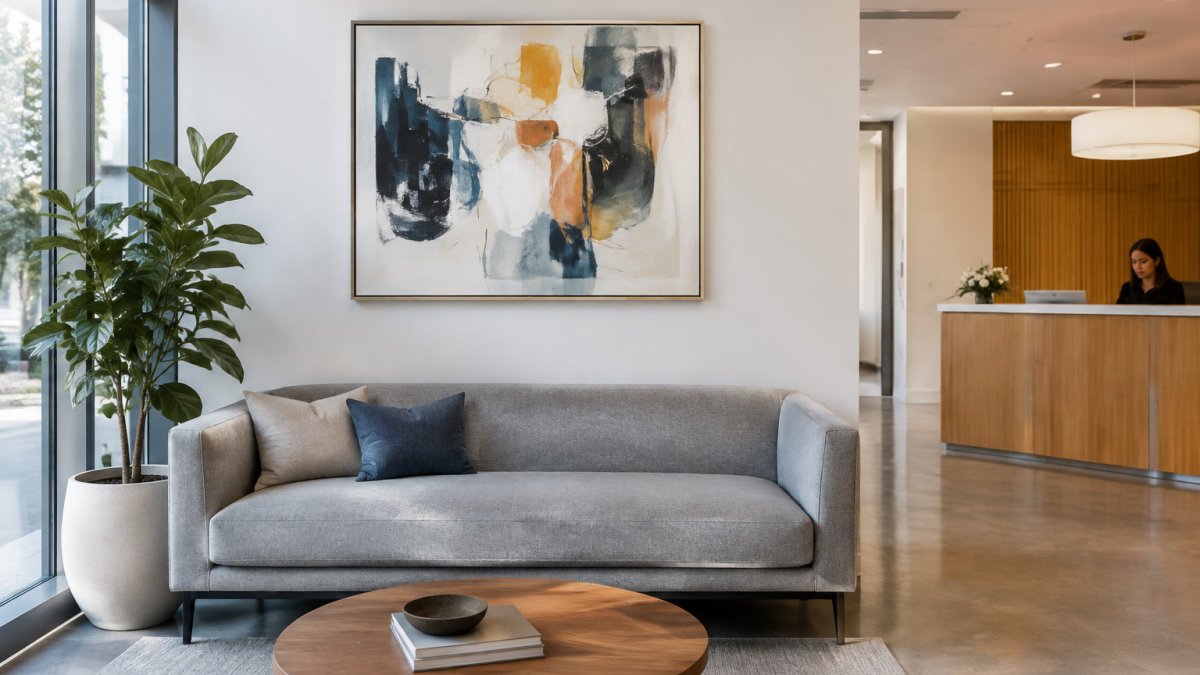
The two-thirds rule suggests a piece of art or a grouping should span roughly 60 to 75 percent of the wall or furniture it sits above. For a sofa or credenza, that means a piece about two-thirds of the furniture's width. The rule gives a reliable starting point so the artwork neither looks lost on a large wall nor overwhelms a small one. Measure the wall or furniture first, then choose a size in that range before ordering.
How do I choose the right size art for an office wall?
Start with the wall width and the furniture below it. Aim for artwork that covers about 60 to 75 percent of that width, and check that the overall height leaves comfortable clearance from ceilings and fixtures. For a large meeting room wall, a single piece or a tight grouping often reads better than several small frames. Mock up the dimensions with painter's tape on the wall before committing, so the scale is confirmed in the actual room.
What kind of art should I put in my office?
Choose art that supports the room's purpose. Reception and client-facing areas usually benefit from polished, modern pieces with clean composition and a balanced palette that reflects the company's identity. Private offices and focus spaces often work better with calmer, lower-contrast art that reduces visual distraction. Meeting rooms can use bolder color to add energy. Avoid subjects that could read as personal or polarizing in a professional setting.
Should office art be calming or energizing?
It depends on the room. Calming art, with soft gradients, muted tones and gentle movement, suits private offices and areas where people concentrate. Energizing art, with brighter color and dynamic composition, fits collaboration spaces and lobbies where a lively first impression matters. Many offices mix both: calm art in workstations and quieter rooms, more vibrant pieces in shared areas.
How do I choose art for a reception area or meeting room?
Reception areas are the first impression for visitors, so prioritize a single strong focal piece that sits above the seating or reception desk and matches the brand's color and tone. Meeting rooms need art that holds up during long sessions without pulling attention from the table. Choose a piece with a restrained palette and clear subject, and confirm it works under the room's lighting. Coordinate frames and finishes with other fixtures in the space.
What should I consider when buying art for a corporate office?
Consider the room purpose and mood, wall size and placement, budget and whether you want prints, originals or commissioned work. Check framing, glazing and mounting hardware for durability in a busy environment, and confirm delivery timing with the seller. Document purchases if the art belongs to a corporate collection, so the inventory and insurance records stay accurate. Pricing depends on quantity, size, framing and delivery, so request a current quote from Jackson Smart Art.
How can office art reflect a company's brand and culture?
Office art communicates identity without a single word. Pick colors that echo the brand palette, subjects that reflect the company's values, and styles that match the tone you want visitors to feel. Abstract or rhythm-driven pieces can suggest energy and craft, while more restrained compositions suggest precision and calm. Keep the selection consistent across shared spaces so the office feels intentional rather than assembled piece by piece.
Where should artwork be placed in an office?
Place artwork where people naturally pause: reception walls, corridors with long sightlines, the wall behind a conference table and open areas near elevators or break rooms. Hang pieces with the center around eye level, roughly 57 to 60 inches from the floor, and adjust for furniture below. Avoid placing art where glare, direct sunlight or heavy foot traffic will damage it or make it hard to see.